ai-robot-zhangxiao
Week 12 - PyBullet 四足机器人 Trot 步态实现
本周基于 PyBullet 搭建四足机器人仿真环境,学习并实现 Trot 小跑步态,观察四足机器人在仿真中的周期运动效果。
本周目标
- 安装 PyBullet 与 NumPy。
- 理解四足机器人 Trot 步态的基本规律。
- 运行课程提供的四足机器人步态代码。
- 观察机器人在仿真中的运动效果并保存结果。
文件说明
| 文件 | 说明 |
|---|---|
README.md |
本周实验说明。 |
readmeimg.png |
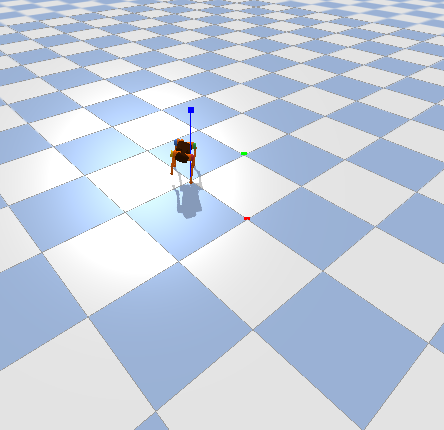
四足机器人仿真运行截图。 |
radio.mp4 |
四足机器人运动效果视频。 |
环境安装
安装 PyBullet 与 NumPy:
pip install pybullet numpy
验证安装:
python3 -c "import pybullet as p; print('PyBullet installed')"
课程代码来源
打开课程页面:
https://course.a-real.me/content/week13.html
参考 13.6.2 Trot 步态实现 部分,将代码保存为本地脚本后运行。
Trot 步态原理
Trot 是四足机器人常见的小跑步态,其特点是对角腿成组运动:
| 相位 | 抬起/摆动腿 | 支撑腿 |
|---|---|---|
| Phase A | 左前腿、右后腿 | 右前腿、左后腿 |
| Phase B | 右前腿、左后腿 | 左前腿、右后腿 |
这种步态可以在速度和稳定性之间取得较好的平衡。
控制思路
- 设置仿真环境、地面和机器人模型。
- 根据时间生成周期性步态相位。
- 为每条腿计算目标位置或关节角。
- 将目标关节角发送给 PyBullet 控制接口。
- 持续刷新仿真,观察机器人运动状态。
运行步骤
运行步态脚本:
python3 test.py
如果使用其他文件名,请将命令中的 test.py 替换为实际脚本名。
结果展示
仿真截图
运动视频
视频文件:radio.mp4
学习总结
本周通过 PyBullet 直观理解了四足机器人的步态控制。Trot 步态的关键在于相位设计和腿部协调,它体现了机器人运动控制中“周期轨迹 + 稳定支撑”的基本思想。